Thanks Mom I Turned Out Awesome SVG Desi Review
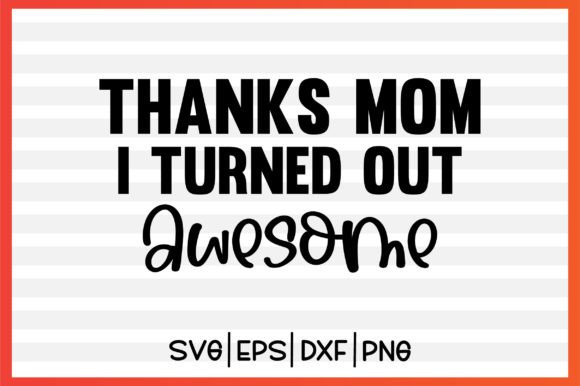
As a designer who spends more time behind an embroidery machine than a computer screen, I approach every new digital asset with a healthy dose of skepticism. When evaluating the Thanks Mom I Turned out Awesome Svg Desi, my first thought isn't about how cute the sentiment is, but whether those letters will actually register on fabric without turning into a thread nest. This design falls squarely into the intersection of Crafts and Graphics, serving as a bridge between digital typography and tangible, stitched goods. For Etsy sellers and small shop owners, this specific phrase carries significant emotional weight, but translating that emotion into a finished product requires understanding the technical behavior of the file.
First Impressions: Typography Meets Stitch Logic
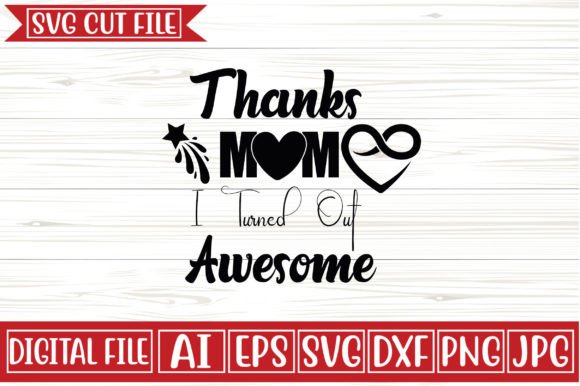
Visually, the Thanks Mom I Turned out Awesome Svg Desi strikes a balance between playful confidence and genuine gratitude. The layout suggests a casual, hand-lettered aesthetic that resonates well with modern personalized gift trends. However, as an embroidery file, typography is unforgiving. My immediate assessment focuses on the stroke width and letter spacing. In digital graphics, thin lines look elegant; in machine embroidery design, they can be structural liabilities if not digitized with adequate column width for satin stitch or sufficient coverage for fill stitch areas.
The "Desi" element implies a cultural specificity or stylistic flair that adds unique character to the design assets. This differentiation is crucial for creative entrepreneurs looking to stand out in a saturated market. When I load this SVG into my digitizing software, I am looking for clean vector nodes. Since the download includes an AI source file alongside the SVG, this offers a massive advantage. It allows me to adjust anchor points before digitizing, ensuring that curves are smooth and corners are sharp, rather than relying on auto-trace features that often produce jagged stitch paths.
Real-World Application: The Custom Sweatshirt Test
To truly judge this design, I mentally place it on a real project. Let’s consider a custom apparel scenario: a heavyweight cotton sweatshirt intended as a Mother’s Day gift or a boutique staple. Sweatshirt fleece has a high pile and texture, which can swallow fine details. If I were stitching the Thanks Mom I Turned out Awesome Svg Desi on this substrate, I would immediately assess the need for a topping stabilizer to prevent the stitches from sinking into the fabric texture.
In this real-life case, the design serves as a centerpiece. For a crewneck sweatshirt, center-chest placement is standard. I would evaluate whether the text height maintains legibility at a 4-inch or 5-inch width. If the font in the SVG is too ornate, scaling it down for a baby embroidery project or a tote bag design might cause the inner loops of letters like 'e' or 'a' to close up during stitching. This is where having the word-by-layer SVG files becomes invaluable. Being able to isolate specific words allows me to rearrange the layout for different hoop size constraints without distorting the original artwork. Perhaps for a smaller embroidered patch, I only use "Awesome" or "Thanks Mom," creating a versatile product line from a single purchase.
Navigating Fabric Variables and Technical Constraints
Not all projects are created equal, and neither are fabrics. While this design shines on stable cottons, caution is required for stretchy or textured materials. If you are planning commercial embroidery on performance wear or thin knits, the stitch density must be managed carefully. Heavy satin stitch columns on lightweight fabric can cause puckering that no amount of steaming will fix. I always recommend testing the embroidery file on a scrap of the exact fabric you intend to use for the final handmade product.
Dark fabrics present another challenge. If the Thanks Mom I Turned out Awesome Svg Desi relies on color contrast for readability, ensure your thread colors pop against the garment. White or metallic threads on navy sweatshirts create a premium look, but they also require higher visibility in your digitizing settings. Conversely, if you are working with caps or curved surfaces, the horizontal span of the text matters. Wide designs often distort on the curve of a hat. In such cases, utilizing the layered SVG to stack the text vertically or arc it appropriately is essential for maintaining professional quality.
Critical Zones for Careful Stitching
- Small Hoop Sizes: Verify minimum legible text height before committing to 4x4 hoops.
- Stretchy Fabrics: Use cut-away stabilizer and potentially adhesive spray to prevent shifting.
- Detailed Corners: Inspect vector points in the AI file to ensure sharp turns don't result in thread bunching.
- Frequent Washing: Ensure running stitch outlines are secure enough to withstand laundry cycles without fraying.
Commercial Viability and Brand Consistency
For Etsy sellers and craft business owners, this design represents more than just a pretty graphic; it is a revenue stream. The sentimental value of "Thanks Mom I Turned Out Awesome" drives buyer engagement, especially during holiday seasons. However, customer trust is built on execution. A pixelated preview or a poorly stitched sample photo will kill conversion rates. Using the included AI and SVG files, you can create crisp, printable mockups that accurately represent the final embroidered patch or garment. High-quality digital product previews signal professionalism.
Furthermore, brand consistency matters. If your shop specializes in bold, minimalist aesthetics, ensure the styling of this SVG aligns with your existing catalog. The ability to modify the source file means you can tweak the design assets to match your brand's specific font weights or decorative elements, making the Thanks Mom I Turned out Awesome Svg Desi feel like a proprietary offering rather than a generic download. Always verify the licensing terms included in your zip file before selling finished items or using the design in commercial embroidery projects to protect your business.
Designer Notes for Optimal Results
Before you hoop your first piece of fabric, take these practical steps to ensure success. First, open the AI file in Adobe Illustrator or a compatible vector editor. Check for any overlapping paths or stray anchor points that could confuse your digitizing software. Clean vectors equal clean stitches. Second, run a test stitch-out on similar fabric weight and texture. Do not skip this step. Evaluate the stitch density and thread tension. Does the satin stitch lay flat? Is the fill stitch too dense, causing stiffness?
- Contrast Check: View the design in black and white to ensure value separation holds up without color reliance.
- Stabilizer Selection: Match stabilizer weight to fabric drape; heavy tear-away for towels, soft cut-away for apparel.
- Thread Color Testing: Compare variegated vs. solid threads to see which best captures the intended mood.
- Mockup Validation: Create realistic visualizations to set accurate customer expectations for personalized gifts.
Ultimately, the Thanks Mom I Turned out Awesome Svg Desi is a strong contender for makers who value both sentiment and craftsmanship. Its inclusion of source files elevates it above standard clip art, providing the flexibility needed for serious embroidery projects. Whether you are creating a one-of-a-kind holiday gift or stocking your small shop with best-selling custom apparel, treating this digital file with technical respect will yield a finished product that honors the message it carries. Remember, in our industry, the difference between a good design and a great product lies entirely in the preparation and execution.